
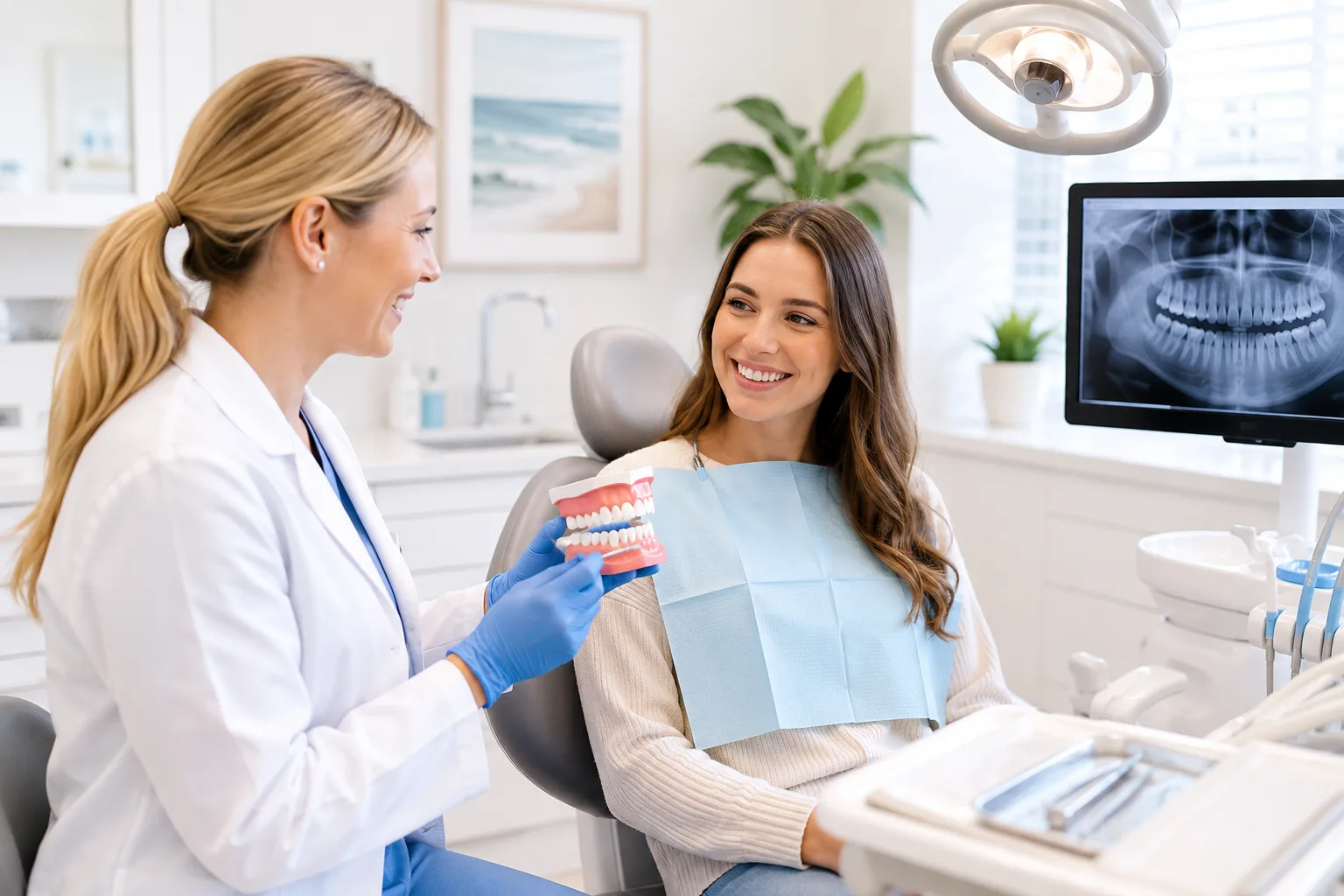
A professional dental cleaning may seem like a simple appointment, but it plays an important role in maintaining a healthy, comfortable smile. Even with consistent brushing and flossing, plaque can remain in hard-to-reach areas and eventually harden into tartar. Professional instruments are needed to remove these deposits safely.
For anyone looking for a dental cleaning in Vacaville, CA, understanding the process can make the visit feel easier and more predictable. A routine cleaning is generally straightforward, and the dental team can adjust the appointment to account for sensitivity, dental anxiety, health concerns, or a long gap since the last visit.
Clinical note: This article provides general information and cannot determine which type of cleaning or treatment an individual needs. A dentist or dental hygienist should evaluate personal symptoms, dental history, and gum health.
Why Professional Dental Cleanings Are Important
Daily oral hygiene is the foundation of preventive care. Brushing cleans the exposed surfaces of the teeth, while floss or another interdental cleaner helps reach between them. However, home care does not always remove every deposit along the gumline, behind the back teeth, or in crowded areas.
Plaque is a soft film that continually forms on teeth. When it is not removed, it can harden into tartar, also called calculus. Tartar cannot usually be brushed away at home. During a professional cleaning, a dental hygienist uses specialized instruments to remove it while paying close attention to the gums and tooth surfaces.
Regular preventive visits also give the dental team an opportunity to look for changes that may not yet be causing discomfort. Depending on the visit and the patient’s needs, the dentist may evaluate the teeth, gums, bite, restorations, and other areas of the mouth. Identifying a concern earlier may allow the patient and dentist to discuss appropriate next steps before the problem becomes more complicated.
What Happens During a Routine Dental Cleaning?
A routine cleaning is often called a prophylaxis. It is generally intended for patients whose gum health does not require more involved periodontal care. Although every appointment is personalized, most preventive cleaning visits include several familiar steps.
Review of Dental and Medical History
The dental team may begin by asking about medications, recent health changes, allergies, pregnancy, previous dental treatment, or current concerns. Patients should mention bleeding gums, sensitivity, tooth pain, jaw discomfort, sores, or changes in the way their bite feels.
This information matters because oral health and general health can influence one another. It also helps the team tailor the appointment and determine whether any precautions or modifications are appropriate.
Evaluation of the Teeth and Gums
Before or during the cleaning, the hygienist may inspect the mouth and assess the condition of the gums. Measurements around the teeth may be recommended to help evaluate gum health. Dental X-rays may also be advised based on clinical findings, dental history, age, symptoms, and when previous images were taken.
Not every patient needs the same services at every appointment. The dental team should explain what is recommended and answer questions before proceeding.
Removal of Plaque and Tartar
The hygienist carefully removes plaque and hardened tartar from the teeth and around the gumline. This process is known as scaling. Hand instruments, powered instruments, or a combination of both may be used depending on the amount and location of buildup.
Patients may hear gentle scraping sounds or feel water and vibration. These sensations are normal during many cleanings. Anyone who feels uncomfortable can ask the hygienist to pause, adjust the instrument, or explain what is happening.
Polishing and Cleaning Between the Teeth
After scaling, the hygienist may polish the teeth to remove some surface stains and leave them feeling smooth. Floss or another interdental tool may then be used to clean between the teeth and check areas where plaque tends to collect.
Polishing can brighten the appearance of teeth by reducing certain external stains, but it is not the same as professional teeth whitening. The natural color of the enamel will remain unless a separate cosmetic treatment is chosen.
Personalized Home-Care Guidance
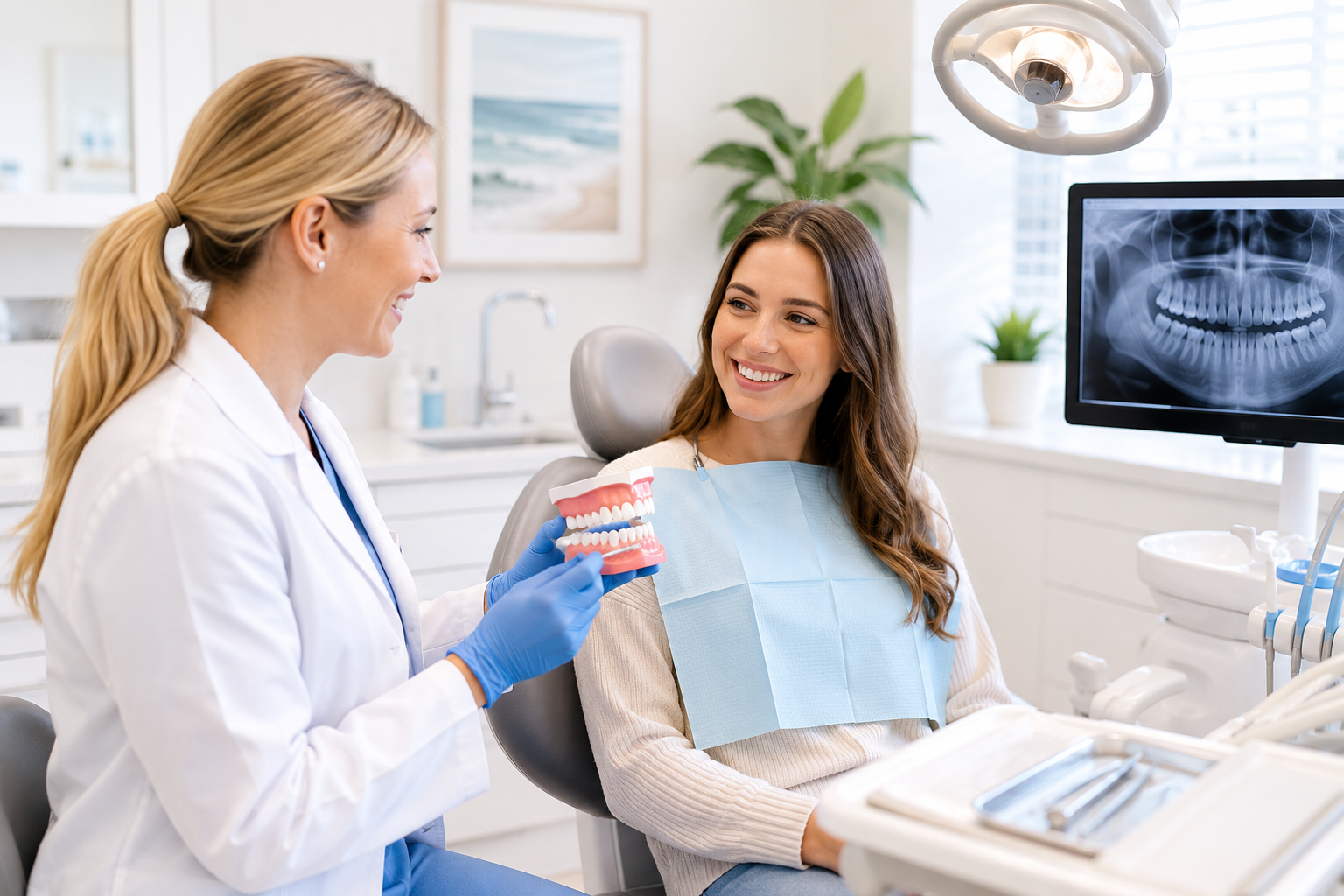
A useful cleaning appointment does more than leave the teeth feeling fresh. The hygienist may point out areas that need extra attention and demonstrate brushing, flossing, or other techniques. Recommendations might include a different toothbrush, an interdental brush, floss threader, water flosser, or fluoride product, depending on individual needs.
Patients are encouraged to ask practical questions. If flossing around a bridge is difficult or a sensitive area makes brushing uncomfortable, the dental team can suggest a more manageable approach.
Does a Dental Cleaning Hurt?
A routine cleaning is usually manageable, but each person experiences dental care differently. Mild tenderness or sensitivity may occur, particularly when there is considerable buildup, exposed root surfaces, inflamed gums, or a long interval between cleanings.
Patients should not feel that they have to stay silent. Letting the hygienist know about sensitive areas before the cleaning begins allows the team to work more carefully. Helpful adjustments may include lighter pressure, changes in instrument settings, short breaks, or other comfort measures considered appropriate by the clinician.
People who feel nervous about dental treatment can also ask the practice what support is available. A calm explanation, a simple hand signal for breaks, and a predictable step-by-step approach can make the experience feel more comfortable.
Routine Cleaning vs. Deep Cleaning
The phrase “dental cleaning” can refer to different types of care. A routine cleaning focuses on preventive maintenance for a generally healthy mouth. A deep cleaning, commonly called scaling and root planing, is different. It may be recommended when the clinical examination shows signs of gum disease that require treatment below the gumline.
Periodontal maintenance is another type of ongoing care used for some patients with a history of gum disease. It is not interchangeable with a standard preventive cleaning.
The appropriate service cannot be selected from symptoms alone. Bleeding, tenderness, persistent bad breath, gum recession, or loose teeth should be discussed with a dentist, but only an examination can establish what care is suitable. Patients should feel comfortable asking why a particular cleaning has been recommended and what it includes.
How Often Should Teeth Be Professionally Cleaned?
There is no single schedule that is right for every patient. The recommended interval depends on gum health, cavity history, home-care habits, tobacco use, dry mouth, restorations, orthodontic appliances, medical considerations, and other personal risk factors.
Some patients do well with standard preventive intervals, while others benefit from more frequent monitoring or periodontal maintenance. A dentist or hygienist can recommend a schedule after reviewing the patient’s current oral health rather than relying on a one-size-fits-all calendar.
If someone has missed several visits, there is no need to feel embarrassed. Dental teams regularly help patients restart preventive care. The first step is simply to schedule an evaluation and explain any concerns.
How to Prepare for a Dental Cleaning in Vacaville, CA
A little preparation can help the appointment run smoothly:
- Bring relevant information: Have insurance details, identification, a medication list, and information about recent health changes available.
- Share concerns early: Tell the team about sensitivity, anxiety, a strong gag reflex, mobility needs, or previous difficult experiences.
- Continue normal home care: Brush and clean between the teeth as usual unless the dental office provides different instructions.
- Ask what the visit includes: An examination, X-rays, fluoride, or other services may be separate from the cleaning.
- Discuss financial questions: Coverage and out-of-pocket costs vary by plan and by the type of care needed. The office can provide an estimate based on the recommended services.
When selecting a local dental office, patients may also want to consider communication style, comfort options, preventive philosophy, available technology, and whether the practice can support changing dental needs over time.
Caring for the Smile After a Cleaning
Teeth often feel smoother after a professional cleaning. Some patients may notice temporary gum tenderness or sensitivity, especially if buildup was present. The dental team can provide individualized guidance if any part of the mouth needs special care.
At home, patients should follow the brushing and interdental-cleaning recommendations provided during the visit. Consistency matters more than using excessive pressure. Brushing too aggressively can irritate the gums and does not replace careful technique.
Patients should contact a dentist if they experience significant pain, swelling, persistent bleeding, a damaged tooth, or another unexpected concern. These symptoms should not simply be attributed to a routine cleaning without professional input.
Frequently Asked Questions
Can a dental cleaning remove stains?
Polishing may reduce some external stains caused by foods, drinks, or tobacco. It does not change the underlying color of the enamel and is not the same as teeth whitening. A dentist can explain cosmetic options if discoloration remains after cleaning.
Can someone get a cleaning without an examination?
Office policies and clinical needs vary. An examination may be recommended so the dentist can assess the teeth and gums, identify concerns, and confirm which type of cleaning is appropriate. New patients often need an evaluation before treatment recommendations can be finalized.
Why do gums bleed during brushing or cleaning?
Bleeding can occur for several reasons, including gum inflammation or irritation. It should not be self-diagnosed. If bleeding is frequent, persistent, or accompanied by swelling, tenderness, recession, or loose teeth, a dental evaluation is appropriate.
Will a cleaning fix bad breath?
A cleaning may help when plaque and tartar contribute to an unpleasant odor, but bad breath can have multiple oral and non-oral causes. Persistent bad breath should be discussed with a dentist or healthcare professional.
How much does a dental cleaning cost in Vacaville?
The cost depends on the type of cleaning, whether an examination or X-rays are needed, and the patient’s insurance benefits. A routine preventive cleaning and periodontal treatment are different services. The dental office can provide a personalized estimate after reviewing the patient’s needs and coverage.
What if it has been years since the last cleaning?
The patient can begin with an evaluation. The dental team will assess current conditions and explain the recommended care without judgment. Depending on gum health and the amount of buildup, the appropriate treatment may differ from a standard cleaning.
Schedule Preventive Dental Care in Vacaville
Professional cleanings support a preventive approach by removing deposits that home care may leave behind and creating an opportunity to monitor oral health. Just as importantly, a good appointment should help patients understand their mouths and feel confident about caring for their smiles between visits.
Peña Adobe Dental Care provides modern family dental care in Vacaville, CA, with an emphasis on personal connection and patient comfort. Anyone who is due for a cleaning, has questions about gum health, or feels anxious about returning to the dentist can contact the practice to discuss the next step and arrange an appropriate consultation.